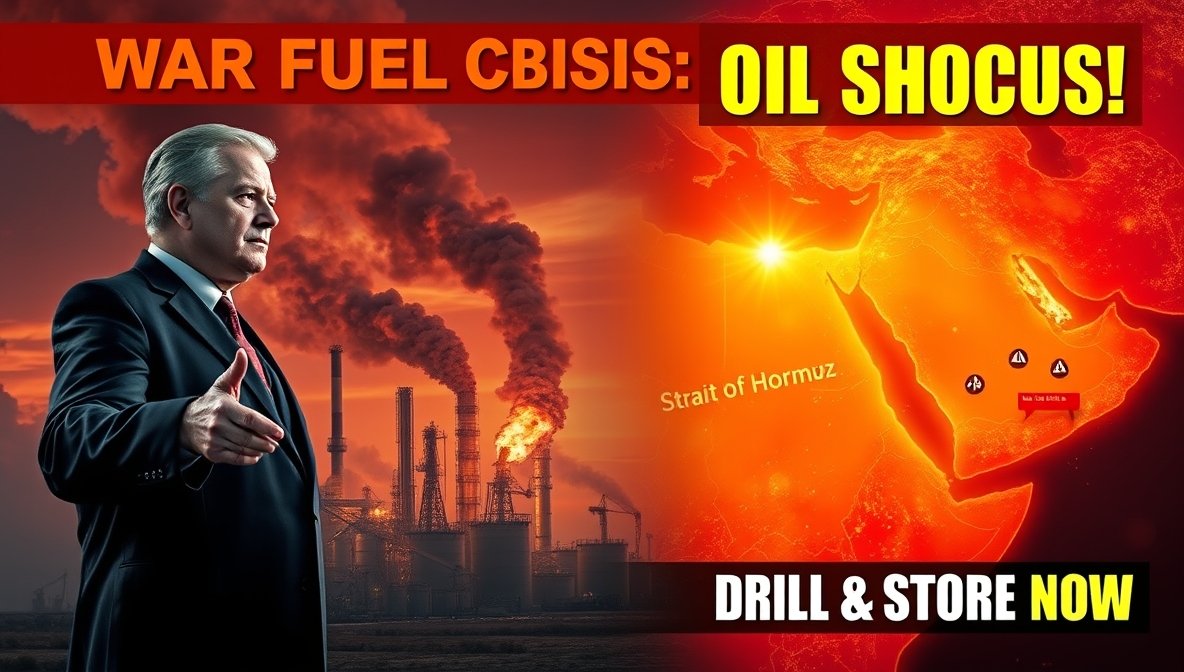
The Middle East conflict has entered a dangerous new phase, rattling global markets and triggering urgent political responses far beyond the region. Now in its fourth week, the war dramatically escalated after the United States and Israel launched coordinated air strikes on Iran in an operation reportedly called “Epic Fury.” The attacks allegedly killed Iran’s Supreme Leader Ayatollah Ali Khamenei along with several senior military and political figures—an event that, if fully confirmed, would mark one of the most consequential moments in modern Middle Eastern geopolitics. Oil markets surged almost immediately, shipping routes tightened, and governments around the world began scrambling to assess the fallout.
A Conflict That Is Rippling Through Global Trade
The immediate shockwave has been economic. Energy traders, shipping companies, and airlines are already bracing for prolonged disruption, particularly around the Strait of Hormuz, one of the world’s most critical maritime chokepoints. Roughly a fifth of global oil passes through this narrow waterway linking the Persian Gulf to international markets.
With tensions rising and military assets moving across the region, insurers have raised shipping risk premiums while several carriers quietly rerouted vessels. Energy analysts warn that prolonged instability could push oil prices sharply higher and tighten supply chains worldwide.
| Key Global Impact Area | What’s Happening | Potential Consequences |
|---|---|---|
| Oil Supply | Rising tensions around Strait of Hormuz | Higher global fuel prices |
| Shipping | Risk premiums and route changes | Delays and increased freight costs |
| Aviation | Airspace restrictions across the Gulf | Flight disruptions and longer routes |
| Global Markets | Energy volatility | Inflation pressures |
The Strait of Hormuz has historically been vulnerable during regional conflicts. According to the U.S. Energy Information, nearly 20 percent of global petroleum liquids transit through the passage daily, making any disruption a major threat to global energy security.
Australia Warns of Fuel Security Risks
Across the world, Australian leaders are already discussing contingency plans. Queensland Premier David Crisafulli used a weekend address to urge the federal government to rethink the nation’s long-term fuel strategy, warning the country remains dangerously exposed to overseas supply disruptions.
Speaking to members of the Liberal National Party at the State Council conference, Crisafulli argued Australia must rebuild domestic capacity to drill, refine, and store fuel.
“Never again should we be in this position,” he said, calling for a renewed national strategy focused on energy resilience.
Australia imports a significant share of its refined fuel products. Government figures from the Department of Climate Change, Energy, the Environment and Water show that domestic refineries now cover only a portion of national demand (https://www.dcceew.gov.au/energy/supply).
Crisafulli also proposed a national fuel monitoring system to improve transparency during crises. His idea: a public dashboard that shows fuel flows and stock levels across the country in real time.
“Australians need coordinated, consistent and clear information,” he said.
Iran’s Internet Blackout Enters a Second Month
Inside Iran, the situation appears increasingly opaque. NetBlocks, an international organization that monitors internet connectivity, reported that Iranian authorities shut down access to the global internet about a month ago, leaving much of the population cut off from international communication.
The blackout is believed to be the longest uninterrupted internet shutdown in the country’s history.
For most citizens, only a restricted internal network—sometimes described as a “national intranet”—remains accessible. That network hosts government-approved services and media but blocks many international platforms.
| Impact of Iran Internet Shutdown | Consequence |
|---|---|
| Communication | Citizens unable to access global internet |
| News Access | Only state-controlled sources widely available |
| Businesses | Online commerce largely halted |
| International Contact | Limited communication with the outside world |
Digital rights groups say the move severely restricts the public’s ability to verify information or communicate with relatives abroad. According to internet monitoring groups, only government officials and segments of the military appear to retain unrestricted access.
Journalists Killed in Southern Lebanon Strike
The conflict’s toll on civilians and journalists continues to mount. Three journalists were reportedly killed in southern Lebanon after an Israeli missile strike hit a clearly marked press vehicle.
According to reports from Reuters and regional media, the victims included two reporters and a cameraman covering the ongoing hostilities near the Israeli-Lebanese border. The Israeli military acknowledged the strike but said one of the journalists had allegedly been linked to Hezbollah and was tracking Israeli troop movements.
The incident triggered protests in Beirut and renewed criticism from press freedom groups, which have repeatedly warned about the dangers journalists face while reporting in active war zones.
Organizations such as the Committee to Protect Journalists continue to document attacks against media workers in conflict areas (https://cpj.org).
Wider Geopolitical Fallout
The regional crisis is also reshaping alliances and security partnerships. Ukrainian President Volodymyr Zelensky recently traveled to the Gulf, signing long-term defense cooperation agreements with Qatar and preparing similar deals with the United Arab Emirates.
The agreements focus on cooperation in missile defense and counter-drone technologies—areas that have become central to modern warfare. Zelensky described the deals as part of a broader effort to build international support amid Ukraine’s continuing war with Russia.
Meanwhile, Iran’s Islamic Revolutionary Guard Corps issued a warning that American- and Israeli-affiliated universities in the Middle East could become targets if attacks on Iranian educational institutions continue. U.S.-linked campuses in Qatar and the UAE, including Texas A&M and New York University branches, were mentioned in the threat.
Security experts say such warnings could further expand the conflict’s psychological and diplomatic dimensions.
Drone Strikes and Escalating Violence Across the Region
Military tensions are also playing out across several countries simultaneously. Kuwait reported that drones struck fuel storage tanks at Kuwait International Airport, causing a massive fire that damaged parts of the airport’s radar infrastructure.
Authorities said air defenses intercepted several drones in the past 24 hours, though some managed to reach the airport perimeter.
In Gaza, violence has continued despite a ceasefire agreement that took effect months earlier. Palestinian health officials report hundreds of deaths since the ceasefire began, with fresh air strikes reported in both southern Gaza and near Gaza City.
The Israeli military has not immediately confirmed the latest incidents but has said it continues to respond to security threats in the area.
Some elements circulating in early reports about the conflict remain difficult to independently confirm and should be treated cautiously. Claims regarding the death of Iran’s Supreme Leader Ayatollah Ali Khamenei and the operation titled “Epic Fury” have not yet been universally verified by major international news agencies or official government statements at the time of writing. Readers should monitor updates from credible sources such as Reuters, the Associated Press, and the BBC for confirmation as the situation develops.
What Happens Next
With energy markets on edge, global shipping routes under pressure, and multiple conflicts intersecting across the Middle East, analysts warn the crisis could evolve rapidly. Much depends on whether regional powers attempt to de-escalate or whether retaliatory actions widen the battlefield.
For governments around the world, the priority is clear: stabilize energy supplies, protect trade routes, and prevent a regional war from turning into something even larger.
But as one analyst put it privately over the weekend, the situation now feels less like a contained conflict and more like the opening act of a far broader geopolitical storm.
FAQs
Why is the Strait of Hormuz so important to global energy markets?
The Strait of Hormuz is one of the world’s most important oil transit chokepoints. Roughly 20 percent of global petroleum supply moves through it each day, making disruptions there extremely impactful.
Why is Australia concerned about fuel security?
Australia imports a large portion of its refined fuel. Disruptions in global oil supply or shipping could lead to shortages or higher prices domestically.
What is Iran’s internet blackout?
Iran has reportedly restricted access to the global internet, allowing citizens to use only a limited state-controlled network, severely restricting communication and information flow.
Are journalists frequently targeted in conflicts?
Journalists working in war zones face significant risks. Organizations such as the Committee to Protect Journalists track incidents involving attacks on reporters.